.svg)


Consultation
Dr. Osayande evaluates brow position, forehead and hairline anatomy, eyelid skin, facial symmetry, medical history, and your goals. Photographs help document the relationship between the brow and upper eyelids.

Upper blepharoplasty is an eyelid surgery that removes excess skin and fat from the upper eyelids to create a more open, refreshed appearance around the eyes. Signature Facial Plastic Surgery serves patients in Rockville, Bethesda, and the greater Washington, DC area.
A more open, refreshed eye appearance
Upper blepharoplasty addresses excess skin and fullness on the upper eyelids that can make the eyes look heavy, tired, or smaller than they naturally are. In more significant cases, this excess skin can even interfere with peripheral vision. The goal is to restore a more open, alert eye appearance while preserving your natural eyelid shape and crease.
At Signature Facial Plastic Surgery, every upper blepharoplasty is planned around your eyelid anatomy, brow position, and the overall balance of your upper face.
Eyelid heaviness isn't always caused by the eyelid skin alone. Dr. Osayande evaluates your brow position along with your eyelids, since a descended brow can sometimes be the primary contributor—making a brow lift, rather than blepharoplasty, the more effective solution.
Thoughtful patient selection

You may be a candidate for upper blepharoplasty if you have excess or hooded skin on your upper eyelids that affects your appearance or, in more advanced cases, your vision. Good candidates are in good general health with realistic expectations about the procedure's results.
If your primary concern is a low or heavy brow rather than eyelid skin itself, a brow lift may be a better fit, either alone or in combination with blepharoplasty. Your consultation is designed to determine which structure is actually driving your concern.
A precise, conservative approach
The amount of skin and fat removed is carefully measured to avoid over-resection, which can create an unnatural, hollow, or overly tight appearance. Dr. Osayande plans each incision along the natural eyelid crease, where scars are well concealed once healed.
The goal is always to preserve enough skin and volume to maintain a natural, expressive eye—not simply to remove as much tissue as possible.
“The upper eyelid should still look like an eyelid after surgery—expressive and natural, not tight or hollow. My approach is about precision, not maximal removal.”
From consultation through recovery
Dr. Osayande evaluates brow position, forehead and hairline anatomy, eyelid skin, facial symmetry, medical history, and your goals. Photographs help document the relationship between the brow and upper eyelids.
Your incision pattern, degree of repositioning, anesthesia plan, and whether another procedure would add meaningful benefit are selected for your anatomy—not from a standard formula.
Brow lift surgery is performed with anesthesia appropriate to the planned technique and setting. The tissues are carefully repositioned and secured while the incisions are closed with attention to scar quality.
Scheduled postoperative visits allow Dr. Osayande to monitor swelling, incision healing, brow position, and your gradual return to normal activities.
Planning your downtime
Healing varies by patient, but the following timeline offers a general framework.
Swelling and bruising are expected around the eyelids.
Bruising typically peaks then begins to improve; stitches are usually removed within the first week if used.
Most patients feel comfortable returning to work and social activities.
Incision lines continue to fade, and final eyelid contour becomes fully apparent.
Initial swelling can obscure results temporarily; the eyelid contour becomes clearer within a few weeks and continues to refine over several months.
Results are long-lasting, though the eyelids will continue to age naturally over time.
Bleeding, infection, asymmetry, dry eyes, and, rarely, difficulty fully closing the eyes.
Considering upper-face rejuvenation?
Your consultation will determine whether the change you see comes primarily from the brow, upper eyelids, dynamic muscle activity, or a combination of factors.
Why choose Signature
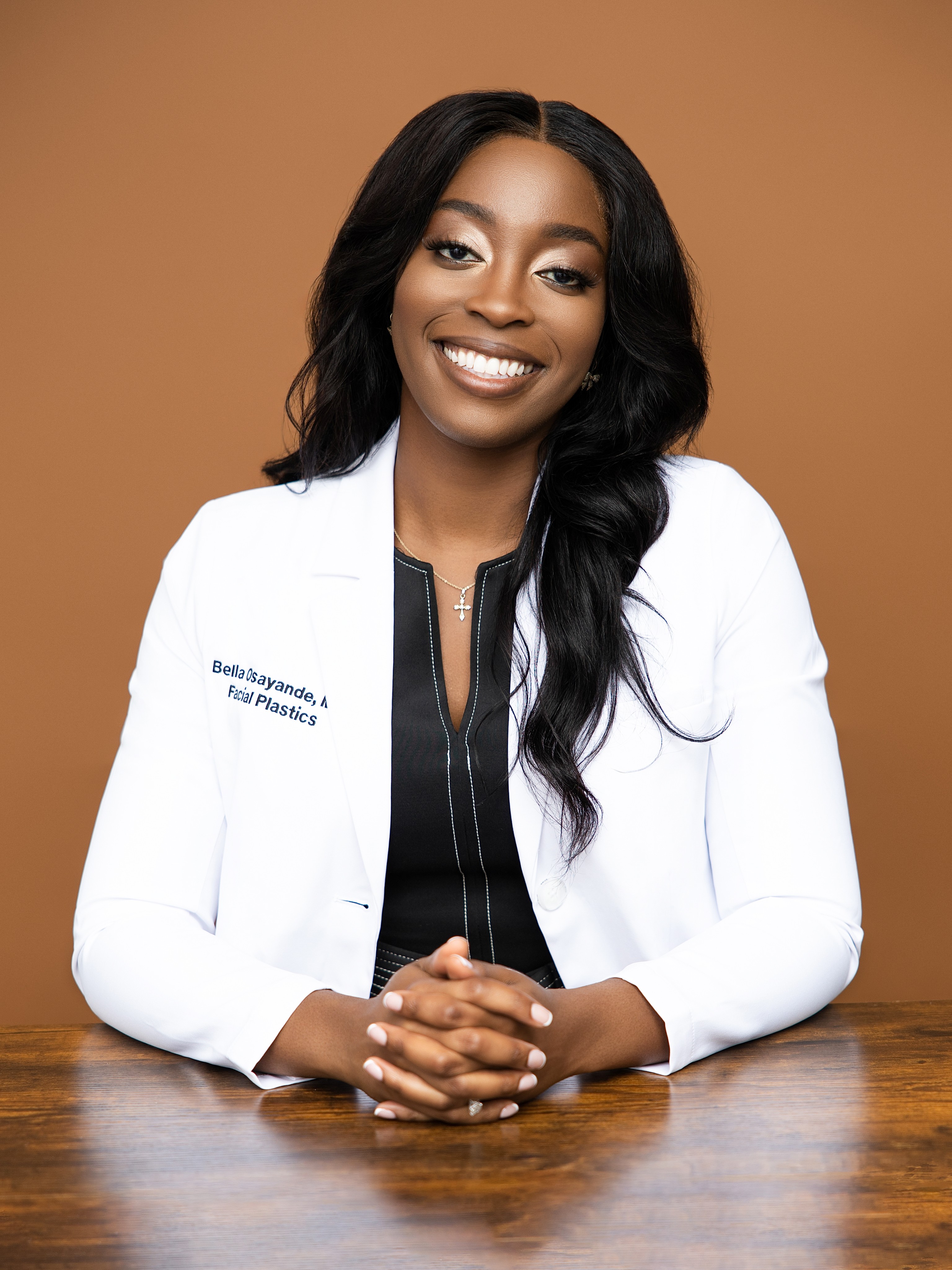
Dr. Bella Osayande is a fellowship-trained facial plastic surgeon whose practice is focused on the face, eyes, brows, nose, neck, and hair. That focused training supports a comprehensive, whole-face approach to every procedure she performs.
Her approach emphasizes precise planning, natural facial expression, honest treatment recommendations, and results that feel proportionate to the individual—not a predetermined aesthetic ideal.
Frequently asked questions
Clear answers to common questions about surgery, recovery, scars, and treatment selection.
Good candidates have excess or hooded upper eyelid skin that affects appearance or vision, with realistic expectations about the outcome. A consultation helps determine whether blepharoplasty, a brow lift, or both are the right fit.
The goal is to remove excess skin while preserving your natural eyelid shape and crease—not to fundamentally alter the shape of your eyes.
Incisions are placed within the natural crease of the upper eyelid, where they are well concealed once healed.
Yes. When brow position contributes to eyelid heaviness, combining the two procedures often produces a more complete and balanced result.
Most patients experience 1–2 weeks of visible swelling and bruising before feeling comfortable returning to social activities.
Incision lines are placed within the eyelid crease and typically fade significantly over several months.

