.svg)


Consultation
Dr. Osayande evaluates brow position, forehead and hairline anatomy, eyelid skin, facial symmetry, medical history, and your goals. Photographs help document the relationship between the brow and upper eyelids.


A brow lift, also called a forehead lift, is a facial plastic surgery procedure that repositions descended eyebrows and smooths forehead tissue to restore a more open, rested appearance around the eyes—without looking surprised or overdone. Signature Facial Plastic Surgery serves patients in Rockville, Bethesda, and the greater Washington, DC area.
A more open, rested expression
Brow lift surgery addresses changes in the upper third of the face caused by brow descent, tissue laxity, and the way the forehead muscles compensate over time. The goal is not to create a dramatically higher brow. It is to restore a more balanced relationship between the forehead, brows, and eyes.
At Signature Facial Plastic Surgery, every plan is designed around your natural brow shape, hairline, eyelid anatomy, facial symmetry, and the expression you want to preserve.
Upper-eyelid heaviness is not always caused by the brow. Dr. Osayande evaluates the brow and eyelids together to determine whether a brow lift, upper blepharoplasty, nonsurgical treatment, or a combined approach best fits your anatomy.
Thoughtful patient selection

You may be a candidate for brow lift surgery if your eyebrows sit lower than they once did, if brow descent contributes to hooding over the upper eyelids, or if you frequently raise your forehead muscles to make the eyes feel more open. Candidates should be in generally good health, have realistic expectations, and be able to pause smoking or nicotine use as directed before and after surgery.
A brow lift is not the right solution for every forehead line or every case of eyelid heaviness. Skin excess isolated to the upper eyelids may be better treated with upper blepharoplasty. Dynamic lines without meaningful brow descent may respond to neuromodulators. Your consultation is designed to distinguish among these concerns rather than recommending surgery by default.
Choosing the right treatment
The procedures can complement one another, but they address different anatomy.
01
A descended or heavy brow, upper-face imbalance, or eyelid hooding partly caused by brow position.
Repositions the brow and supporting tissues for durable upper-face rejuvenation.
02
Excess upper-eyelid skin or fullness when the brow itself is in an appropriate position.
Refines the upper eyelid without repositioning the brow.
03
Dynamic forehead or frown lines and patients seeking a subtle, temporary change.
Relaxes selected muscles and may create a modest chemical brow lift; it does not surgically correct significant brow descent.
An anatomy-led approach
There is no single brow shape or surgical technique that suits every face. Dr. Osayande considers forehead height, hairline position, brow thickness and shape, temple anatomy, eyelid skin, asymmetry, and the amount and pattern of brow descent before recommending an approach.
Depending on these findings, a surgical plan may involve an endoscopic, temporal or lateral, or hairline-based approach. Incisions are planned within or near the hairline whenever appropriate, with attention to both access and scar placement. The objective is controlled repositioning—not excessive elevation—so that facial expression and individual character remain intact.
“A successful brow lift should make the eyes feel more open and the upper face more balanced without making you look surprised or unlike yourself.”
From consultation through recovery
Dr. Osayande evaluates brow position, forehead and hairline anatomy, eyelid skin, facial symmetry, medical history, and your goals. Photographs help document the relationship between the brow and upper eyelids.
Your incision pattern, degree of repositioning, anesthesia plan, and whether another procedure would add meaningful benefit are selected for your anatomy—not from a standard formula.
Brow lift surgery is performed with anesthesia appropriate to the planned technique and setting. The tissues are carefully repositioned and secured while the incisions are closed with attention to scar quality.
Scheduled postoperative visits allow Dr. Osayande to monitor swelling, incision healing, brow position, and your gradual return to normal activities.
Planning your downtime
Healing varies by technique and by patient, but the following timeline offers a general framework.
Swelling, tightness, tenderness, and bruising are expected. Keeping the head elevated and following the prescribed postoperative plan can support early healing.
Swelling and bruising begin to improve. Temporary forehead or scalp numbness, itching, or altered sensation may occur.
Many patients feel comfortable returning to work and social activities once bruising is manageable. Individual timing depends on the procedure and personal comfort.
Most routine activities can gradually resume as directed. The brow continues to settle and residual swelling becomes less noticeable.
Incisions mature and the tissues soften into a more natural position. Results are designed to be durable, although the face will continue to age normally.
An improvement in brow position is visible early, but swelling and temporary tissue elevation can affect the initial appearance. A more settled result develops over the following weeks and months.
A surgical brow lift can provide long-lasting improvement, but it does not stop the aging process. Skin quality, anatomy, sun exposure, nicotine use, and time all influence longevity.
Potential risks include bleeding, infection, scarring, asymmetry, numbness or altered sensation, hairline changes or localized hair loss, nerve injury, over- or under-correction, and anesthesia-related complications.
Considering upper-face rejuvenation?
Your consultation will determine whether the change you see comes primarily from the brow, upper eyelids, dynamic muscle activity, or a combination of factors.
Why choose Signature
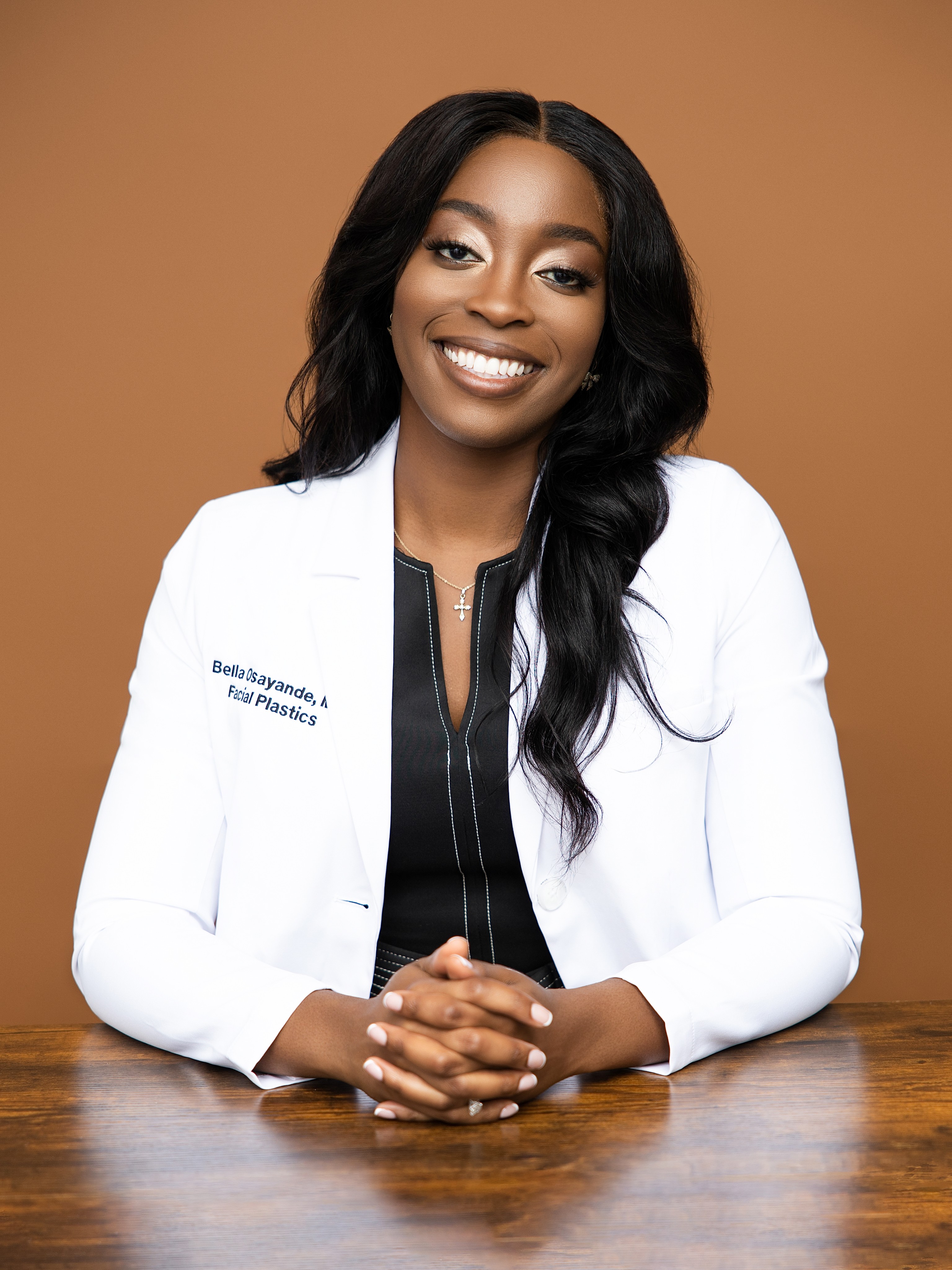
Dr. Bella Osayande is a fellowship-trained facial plastic surgeon whose practice is focused on the face, eyes, brows, nose, neck, and hair. That focused training supports a comprehensive, whole-face approach to every procedure she performs.
Her approach emphasizes precise planning, natural facial expression, honest treatment recommendations, and results that feel proportionate to the individual—not a predetermined aesthetic ideal.
Frequently asked questions
Clear answers to common questions about surgery, recovery, scars, and treatment selection.
Good candidates commonly have a descended or heavy brow, upper-eyelid hooding partly caused by brow position, brow asymmetry, or frequent forehead muscle recruitment. A consultation is necessary because similar concerns may instead be caused by upper-eyelid skin or dynamic lines.
A brow lift repositions the eyebrow and supporting upper-face tissues. Upper blepharoplasty removes or repositions excess tissue within the upper eyelid. Some patients benefit from one procedure, while others may benefit from a carefully planned combination.
Botox or Dysport can relax selected muscles and create a subtle, temporary elevation in appropriate patients. A surgical brow lift repositions descended tissues and generally produces a more substantial and durable change.
The goal is balanced repositioning rather than excessive elevation. Careful assessment of brow shape, asymmetry, eyelid anatomy, and facial expression helps Dr. Osayande plan a natural-looking result.
Incision location depends on the selected technique and your hairline and forehead anatomy. Incisions are commonly planned within or immediately adjacent to the hairline so that scars can become less conspicuous as they mature.
All surgery creates scars. Brow lift incisions are strategically positioned, and most scars fade with time, but scar quality varies among patients.
Many patients plan for approximately one to two weeks of social downtime. Swelling, bruising, tightness, and temporary sensory changes can persist beyond that period.
The anesthesia plan depends on the surgical technique, whether procedures are combined, your health, and the operative setting.
Yes. Brow lift surgery may be combined with upper or lower blepharoplasty, facelift or neck lift, or other facial procedures when doing so safely supports a more balanced result.
Pricing depends on the technique, operative setting, anesthesia, and whether another procedure is performed. After consultation, you will receive an individualized surgical plan and detailed quote.

