.svg)


Consultation
Dr. Osayande evaluates brow position, forehead and hairline anatomy, eyelid skin, facial symmetry, medical history, and your goals. Photographs help document the relationship between the brow and upper eyelids.

Wrinkle relaxers such as Botox and Dysport are injectable neuromodulators that soften expression lines by easing the muscle activity that creates them. Signature Facial Plastic Surgery serves patients in Rockville, Bethesda, and the greater Washington, DC area.
Softer lines, natural movement
Lines that appear when you move — across the forehead, between the brows, at the outer corners of the eyes — are created by muscle activity rather than by lost volume. Wrinkle relaxers work at that muscle, easing the pull that etches those lines into the skin over time.
At Signature Facial Plastic Surgery, dosing is planned around how your face actually moves, so expression is preserved while the lines soften.
Wrinkle relaxers address lines caused by movement. Lines visible when your face is completely at rest are usually driven by volume loss or skin quality, and may respond better to filler, resurfacing, or a combination. Your consultation will clarify which is which.
Thoughtful patient selection

You may be a good candidate if you have dynamic lines that appear or deepen with expression, are in good general health, and want a change that is noticeable to you without being obvious to others.
Wrinkle relaxers are not appropriate during pregnancy or breastfeeding, or for patients with certain neuromuscular conditions. Your medical history is reviewed in full before any treatment is planned.
A conservative, adjustable approach
Dr. Osayande assesses your muscle strength and movement pattern before selecting dose and placement, because the same number of units produces very different results on different faces.
First treatments are planned conservatively. It is straightforward to add at your two-week follow-up, and considerably less pleasant to wait out a result that went too far.
“Expression is part of how people recognize you. The aim is a softer line, not a still face.”
From consultation through follow-up
Dr. Osayande evaluates brow position, forehead and hairline anatomy, eyelid skin, facial symmetry, medical history, and your goals. Photographs help document the relationship between the brow and upper eyelids.
Your incision pattern, degree of repositioning, anesthesia plan, and whether another procedure would add meaningful benefit are selected for your anatomy—not from a standard formula.
Brow lift surgery is performed with anesthesia appropriate to the planned technique and setting. The tissues are carefully repositioned and secured while the incisions are closed with attention to scar quality.
Scheduled postoperative visits allow Dr. Osayande to monitor swelling, incision healing, brow position, and your gradual return to normal activities.
Planning your downtime
Healing varies by patient, but the following timeline offers a general framework.
Avoid rubbing the treated areas, strenuous exercise, and lying flat for approximately four hours.
Softening begins as the treated muscles gradually relax.
The full effect is apparent. This is the right point to assess any refinement.
Movement gradually returns, and most patients schedule their next treatment.
At around two weeks, once the wrinkle relaxer has taken full effect.
Typically three to four months, varying by area, dose, and individual metabolism.
Bruising, headache, temporary eyelid or brow droop, asymmetry, and, rarely, spread of effect to nearby muscles.
Considering upper-face rejuvenation?
Your consultation will determine whether the change you see comes primarily from the brow, upper eyelids, dynamic muscle activity, or a combination of factors.
Why choose Signature
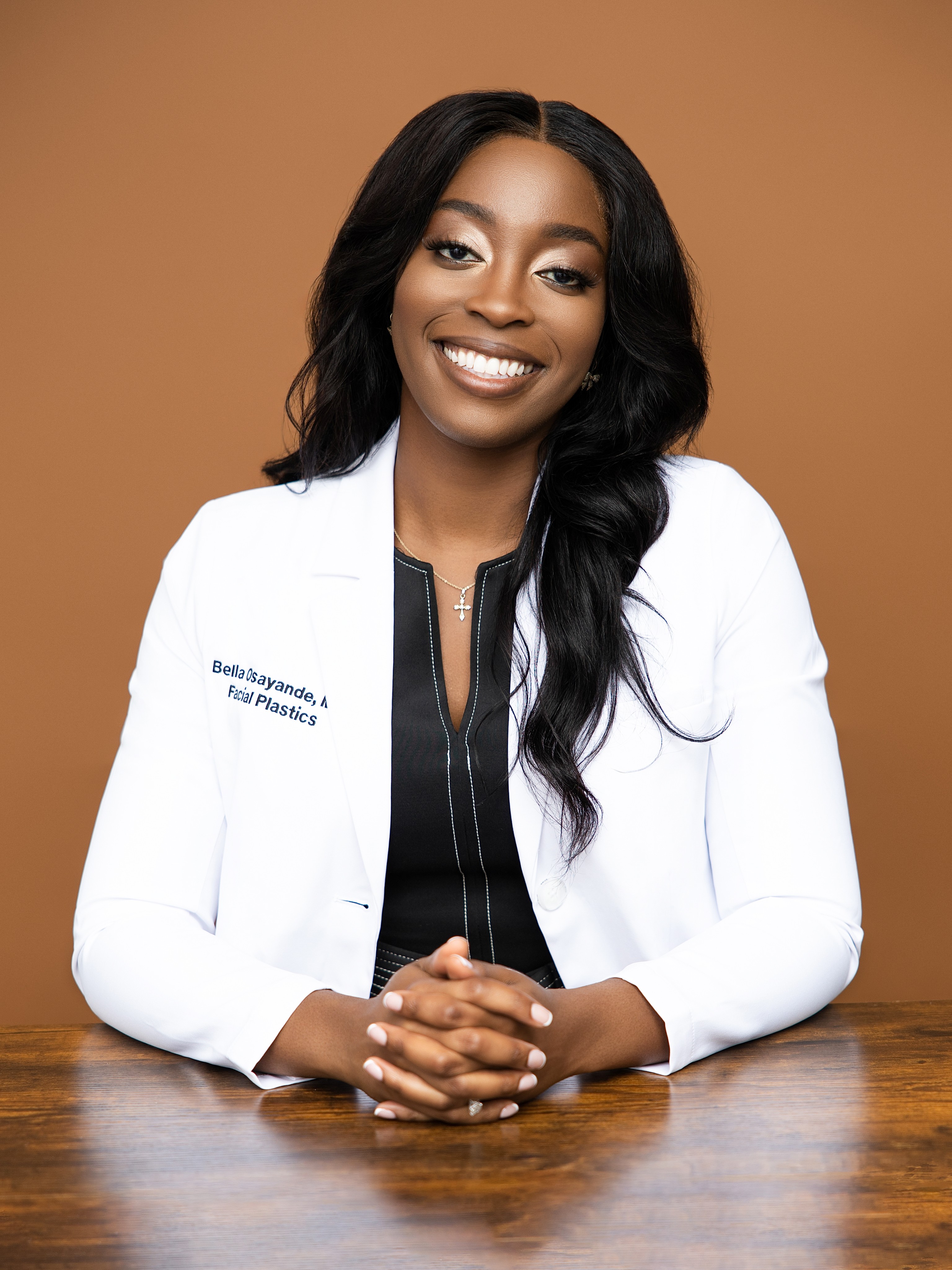
Dr. Bella Osayande is a fellowship-trained facial plastic surgeon whose practice is focused on the face, eyes, brows, nose, neck, and hair. That focused training supports a comprehensive, whole-face approach to every procedure she performs.
Her approach emphasizes precise planning, natural facial expression, honest treatment recommendations, and results that feel proportionate to the individual—not a predetermined aesthetic ideal.
Frequently asked questions
Clear answers to common questions about surgery, recovery, scars, and treatment selection.
Most patients notice softening within 3–5 days, with the full effect typically apparent around two weeks. Dysport often begins working slightly sooner than Botox.
Results typically last three to four months. Longevity varies with the area treated, the dose used, and individual metabolism.
Dosing is planned to soften lines while preserving natural movement. A conservative first treatment can always be adjusted at your two-week follow-up.
Both relax the same muscles using similar neuromodulator proteins. Dysport tends to have a slightly faster onset and spreads a little more, which can suit broader areas such as the forehead.
No meaningful downtime. Small red bumps at the injection sites usually settle within an hour, and any bruising typically resolves within a few days.
Treating dynamic lines before they etch into the skin may slow their progression. Suitability depends on your skin and your expression pattern, and is discussed at consultation.
