.svg)


Consultation
Dr. Osayande evaluates brow position, forehead and hairline anatomy, eyelid skin, facial symmetry, medical history, and your goals. Photographs help document the relationship between the brow and upper eyelids.

Lower blepharoplasty is an eyelid surgery that reduces under-eye bags and smooths the transition between the lower eyelid and cheek, creating a more rested, refreshed appearance. Signature Facial Plastic Surgery serves patients in Rockville, Bethesda, and the greater Washington, DC area.
A smoother, more rested under-eye appearance
Lower blepharoplasty addresses under-eye bags, hollowing, and excess skin that can make you look tired or older than you feel, regardless of how much sleep you get. The procedure smooths the transition between the lower eyelid and cheek, softening the shadow that under-eye bags often create.
At Signature Facial Plastic Surgery, treatment is tailored to whether your under-eye concerns stem from excess fat, skin laxity, or volume loss—since each requires a different approach.
Not all under-eye concerns are the same. Some patients benefit more from volume restoration (like facial fat transfer) than surgical skin or fat removal. Dr. Osayande evaluates the specific cause of your under-eye appearance before recommending an approach.
Thoughtful patient selection

You may be a candidate for lower blepharoplasty if you have persistent under-eye bags, excess skin, or hollowing that doesn't improve with rest or skincare. Good candidates are in good general health with realistic expectations about the results.
If volume loss is the primary driver of your under-eye appearance rather than excess fat or skin, a non-surgical option like facial fat transfer may be more appropriate. Your consultation will help clarify which approach fits your anatomy.
A conservative, natural approach
Dr. Osayande evaluates whether fat should be removed, repositioned, or both, since simply removing fat can sometimes create a hollowed appearance over time. The goal is to smooth the lid-cheek transition while preserving natural volume and contour.
Incisions are typically placed either just below the lash line or inside the eyelid itself, depending on your specific anatomy and needs.
“Under-eye bags shouldn't just be removed—they should be addressed thoughtfully, often by repositioning rather than simply taking tissue away. The goal is a smooth, natural transition, not a hollowed look.”
From consultation through recovery
Dr. Osayande evaluates brow position, forehead and hairline anatomy, eyelid skin, facial symmetry, medical history, and your goals. Photographs help document the relationship between the brow and upper eyelids.
Your incision pattern, degree of repositioning, anesthesia plan, and whether another procedure would add meaningful benefit are selected for your anatomy—not from a standard formula.
Brow lift surgery is performed with anesthesia appropriate to the planned technique and setting. The tissues are carefully repositioned and secured while the incisions are closed with attention to scar quality.
Scheduled postoperative visits allow Dr. Osayande to monitor swelling, incision healing, brow position, and your gradual return to normal activities.
Planning your downtime
Healing varies by patient, but the following timeline offers a general framework.
Swelling and bruising are expected around the lower eyelids.
Bruising typically peaks then gradually improves.
Most patients feel comfortable returning to social activities, often with light makeup.
Any residual swelling resolves and final contour becomes fully apparent.
Initial swelling can distort results; final contour is usually visible within a few weeks and continues to refine over subsequent months.
Results are long-lasting, though the under-eye area will continue to age naturally.
Bleeding, infection, asymmetry, dry or irritated eyes, and, rarely, changes to lower eyelid position.
Considering upper-face rejuvenation?
Your consultation will determine whether the change you see comes primarily from the brow, upper eyelids, dynamic muscle activity, or a combination of factors.
Why choose Signature
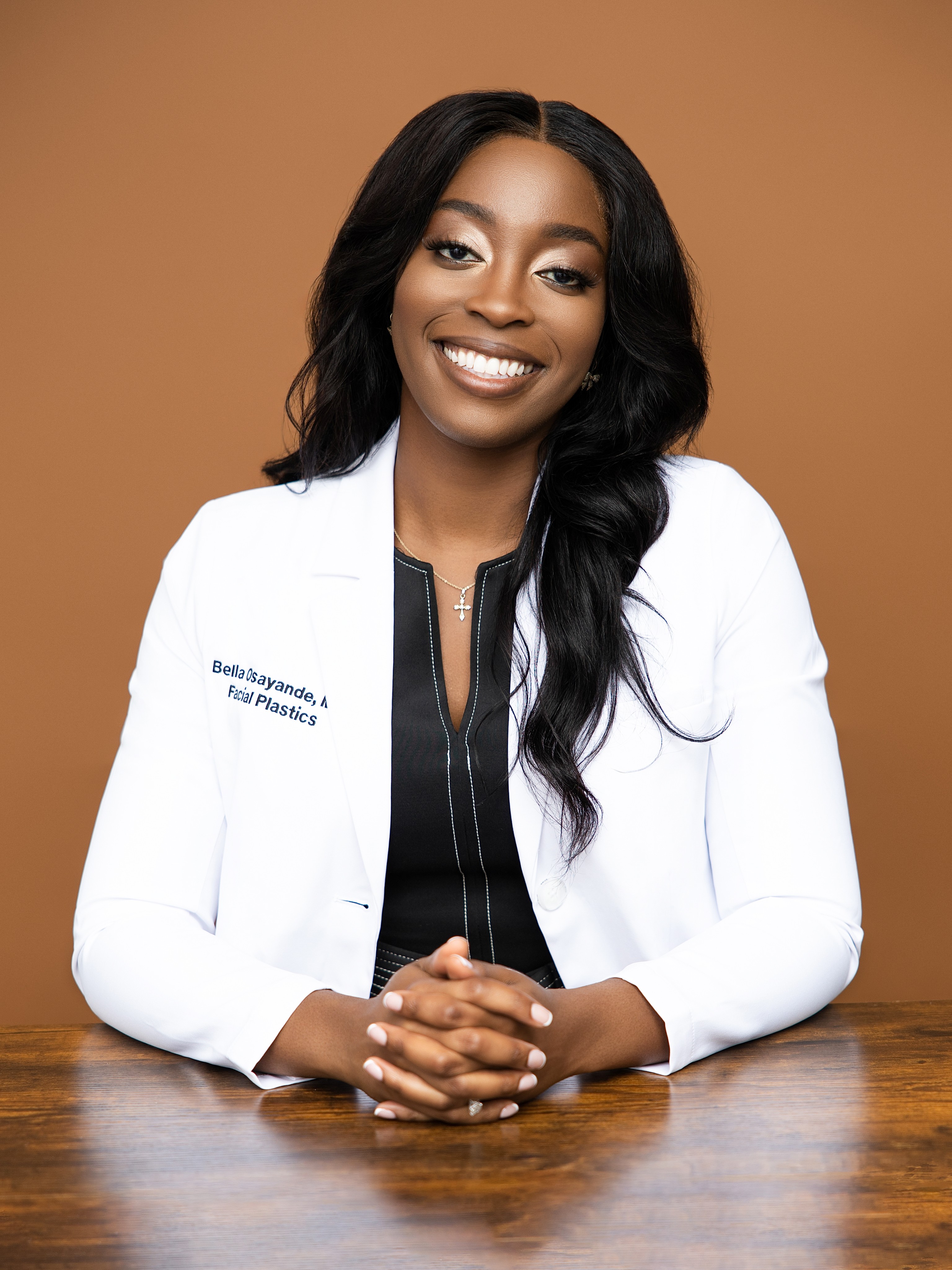
Dr. Bella Osayande is a fellowship-trained facial plastic surgeon whose practice is focused on the face, eyes, brows, nose, neck, and hair. That focused training supports a comprehensive, whole-face approach to every procedure she performs.
Her approach emphasizes precise planning, natural facial expression, honest treatment recommendations, and results that feel proportionate to the individual—not a predetermined aesthetic ideal.
Frequently asked questions
Clear answers to common questions about surgery, recovery, scars, and treatment selection.
Good candidates have persistent under-eye bags, hollowing, or excess skin that doesn't respond to rest or skincare, along with realistic expectations for the outcome.
Results depend on the underlying cause—fat-related bags typically respond well, while shadows caused primarily by volume loss may benefit more from fat transfer or filler.
Incisions are placed either just below the lash line or inside the lower eyelid (transconjunctival), depending on your anatomy.
Yes. It's often paired with upper blepharoplasty or facial fat transfer for more comprehensive rejuvenation.
Most patients experience 1–2 weeks of visible swelling and bruising.
When external incisions are used, they're placed just below the lash line and typically fade significantly with time.

