.svg)


Consultation
Dr. Osayande evaluates brow position, forehead and hairline anatomy, eyelid skin, facial symmetry, medical history, and your goals. Photographs help document the relationship between the brow and upper eyelids.

Facial fat transfer restores youthful, natural facial volume using your own fat, addressing hollowing and volume loss without synthetic fillers. Signature Facial Plastic Surgery serves patients in Rockville, Bethesda, and the greater Washington, DC area.
Natural volume restoration
As we age, the face naturally loses volume in areas like the cheeks, temples, and under-eyes, contributing to a hollowed or tired appearance. Facial fat transfer addresses this by harvesting fat from another area of your body and re-injecting it into areas of facial volume loss.
At Signature Facial Plastic Surgery, fat transfer is planned to restore volume in a way that looks like your own natural fullness, not an artificially plumped appearance.
Facial fat transfer is not the right choice for every patient—some fat may be reabsorbed by the body, requiring touch-up treatments over time. Dr. Osayande will discuss realistic expectations for volume retention during your consultation.
Thoughtful patient selection

You may be a candidate for facial fat transfer if you have facial hollowing or volume loss and have adequate donor fat available elsewhere on your body. Good candidates are in good general health with realistic expectations about fat retention, since not all transferred fat survives permanently.
Facial fat transfer can be performed alone or combined with other facial procedures, such as a facelift or brow lift, for more comprehensive rejuvenation.
A natural, two-step process
Fat is carefully harvested from a donor area using gentle liposuction technique, then purified and precisely injected into areas of facial volume loss using specialized techniques designed to maximize graft survival.
Because some transferred fat is naturally reabsorbed by the body, Dr. Osayande often slightly overcorrects treated areas to account for this expected volume loss over the following months.
“Fat transfer done well should restore the volume you had, not create a puffy or overfilled look. It's about giving the face back what time has taken, not more than that.”
From consultation through recovery
Dr. Osayande evaluates brow position, forehead and hairline anatomy, eyelid skin, facial symmetry, medical history, and your goals. Photographs help document the relationship between the brow and upper eyelids.
Your incision pattern, degree of repositioning, anesthesia plan, and whether another procedure would add meaningful benefit are selected for your anatomy—not from a standard formula.
Brow lift surgery is performed with anesthesia appropriate to the planned technique and setting. The tissues are carefully repositioned and secured while the incisions are closed with attention to scar quality.
Scheduled postoperative visits allow Dr. Osayande to monitor swelling, incision healing, brow position, and your gradual return to normal activities.
Planning your downtime
Healing varies by patient, but the following timeline offers a general framework.
Swelling and bruising at both the donor site and facial injection areas are expected.
Swelling gradually improves; the face may appear fuller than the final result during this period.
Most visible swelling resolves, and patients feel comfortable in social settings.
The body reabsorbs a portion of transferred fat, with final, more subtle volume becoming apparent.
Initial swelling temporarily overstates volume; final results, after some fat reabsorption, are typically apparent by 3–6 months.
Fat that successfully survives the transfer process is generally permanent, though the exact percentage of retained fat varies by patient.
Bleeding, infection, asymmetry, irregular contour, and variable fat survival requiring possible touch-up treatment.
Considering upper-face rejuvenation?
Your consultation will determine whether the change you see comes primarily from the brow, upper eyelids, dynamic muscle activity, or a combination of factors.
Why choose Signature
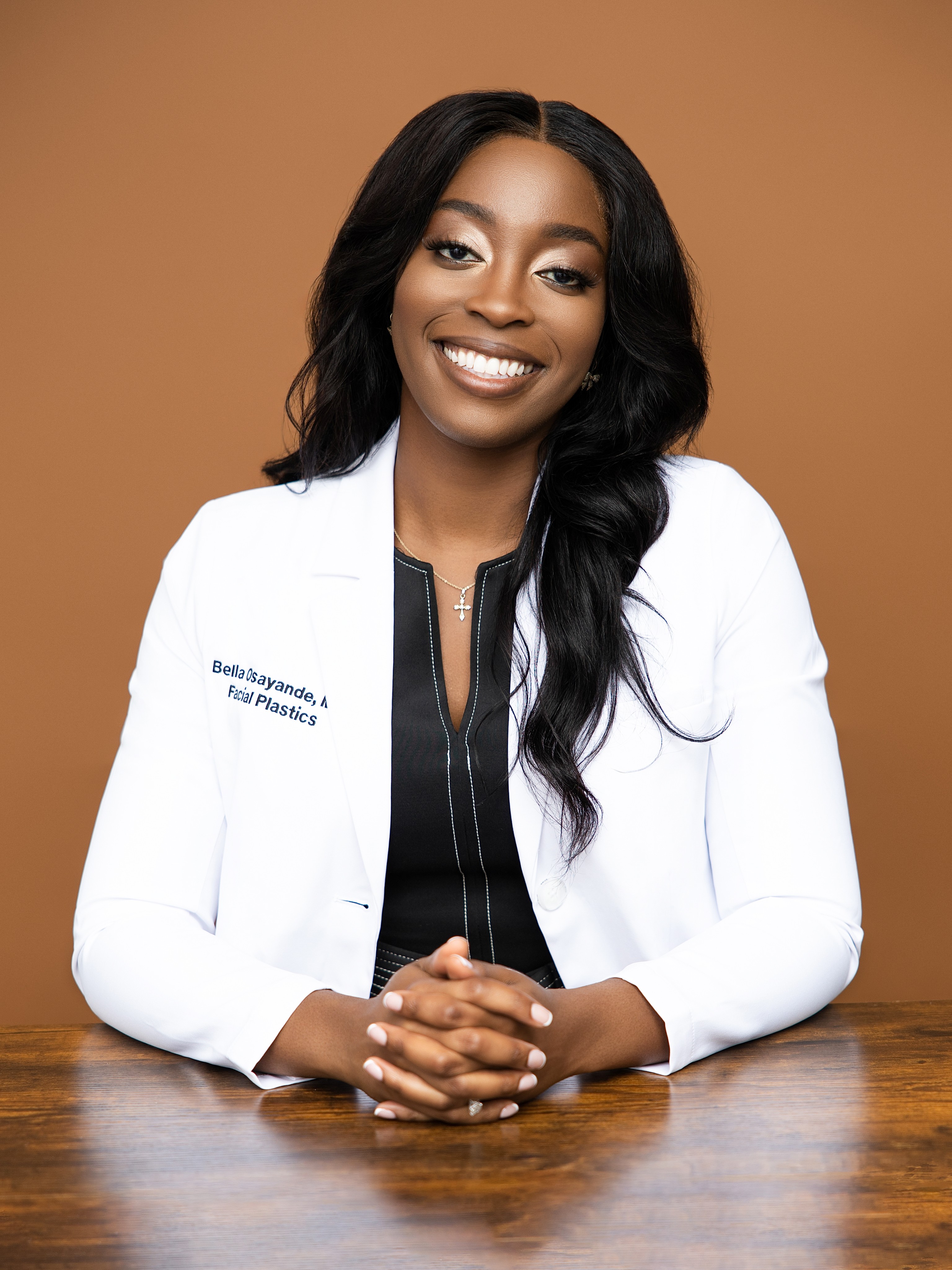
Dr. Bella Osayande is a fellowship-trained facial plastic surgeon whose practice is focused on the face, eyes, brows, nose, neck, and hair. That focused training supports a comprehensive, whole-face approach to every procedure she performs.
Her approach emphasizes precise planning, natural facial expression, honest treatment recommendations, and results that feel proportionate to the individual—not a predetermined aesthetic ideal.
Frequently asked questions
Clear answers to common questions about surgery, recovery, scars, and treatment selection.
Good candidates have facial volume loss or hollowing, adequate donor fat available, and realistic expectations about fat retention over time.
Some transferred fat is naturally reabsorbed by the body; Dr. Osayande accounts for this by slightly overcorrecting treatment areas.
Fat transfer uses your own tissue for potentially longer-lasting results, while fillers use synthetic or biocompatible materials that are gradually metabolized.
Fat is typically harvested from areas like the abdomen or thighs using gentle liposuction technique.
Most patients experience 1–2 weeks of visible swelling and bruising at both donor and injection sites.
Yes, it's frequently combined with facelift, brow lift, or other facial rejuvenation procedures.

