.svg)


Consultation
Dr. Osayande evaluates brow position, forehead and hairline anatomy, eyelid skin, facial symmetry, medical history, and your goals. Photographs help document the relationship between the brow and upper eyelids.

Buccal fat removal is a facial contouring procedure that reduces fullness in the lower cheeks to create more defined, sculpted facial contours. Signature Facial Plastic Surgery serves patients in Rockville, Bethesda, and the greater Washington, DC area.
A more sculpted, defined profile
Buccal fat removal addresses fullness in the lower cheeks caused by the buccal fat pad—a naturally occurring fat deposit between the cheekbone and jawline. The goal is not to create a gaunt or hollow appearance. It is to reveal more natural facial contour and definition, particularly along the cheeks and jawline.
At Signature Facial Plastic Surgery, every plan is designed around your facial structure, skin quality, and the balance you want to achieve between fullness and definition.
Buccal fat removal is not the right choice for every face. Patients who are already naturally thin or who may lose facial volume with age are typically not good candidates, since the procedure is permanent. Dr. Osayande evaluates your full facial structure, not just the cheeks, before recommending this approach.
Thoughtful patient selection

You may be a candidate for buccal fat removal if you have persistent fullness in the lower cheeks that makes your face appear rounder than you'd like, especially if this fullness is disproportionate to your overall body weight. Good candidates are typically in good general health with realistic expectations about the permanence of the results.
Because this procedure removes fat permanently, it is not recommended for patients who are still developing facial structure, who may be prone to future facial thinning, or whose main concern is actually jawline or neck fullness rather than cheek fullness—those concerns may be better addressed with liposuction or other contouring procedures.
A conservative, balanced approach
The amount of buccal fat removed significantly affects the final result, and more is not always better. Dr. Osayande takes a conservative approach, removing only what's needed to achieve natural-looking definition, since overcorrection can lead to a gaunt or aged appearance later in life.
The procedure is performed through a small incision inside the mouth, leaving no visible external scarring.
“Buccal fat removal should enhance your natural bone structure, not erase your cheeks entirely. Because the results are permanent, I only recommend this procedure for patients whose anatomy and goals genuinely call for it.”
From consultation through recovery
Dr. Osayande evaluates brow position, forehead and hairline anatomy, eyelid skin, facial symmetry, medical history, and your goals. Photographs help document the relationship between the brow and upper eyelids.
Your incision pattern, degree of repositioning, anesthesia plan, and whether another procedure would add meaningful benefit are selected for your anatomy—not from a standard formula.
Brow lift surgery is performed with anesthesia appropriate to the planned technique and setting. The tissues are carefully repositioned and secured while the incisions are closed with attention to scar quality.
Scheduled postoperative visits allow Dr. Osayande to monitor swelling, incision healing, brow position, and your gradual return to normal activities.
Planning your downtime
Healing varies by patient, but the following timeline offers a general framework.
Swelling, tenderness, and difficulty with full mouth opening are expected.
Swelling gradually improves; a soft-food diet is typically recommended.
Most patients feel comfortable returning to normal social activities.
Residual swelling continues to resolve, and cheek contour becomes more apparent.
Final results become fully visible as all swelling resolves.
Initial swelling can make results hard to judge early on; final facial contour is typically visible around 3–6 months.
Yes—buccal fat removal is permanent, which is why conservative planning matters.
Bleeding, infection, asymmetry, numbness or altered sensation, and unsatisfactory contour (over- or under-correction).
Considering upper-face rejuvenation?
Your consultation will determine whether the change you see comes primarily from the brow, upper eyelids, dynamic muscle activity, or a combination of factors.
Why choose Signature
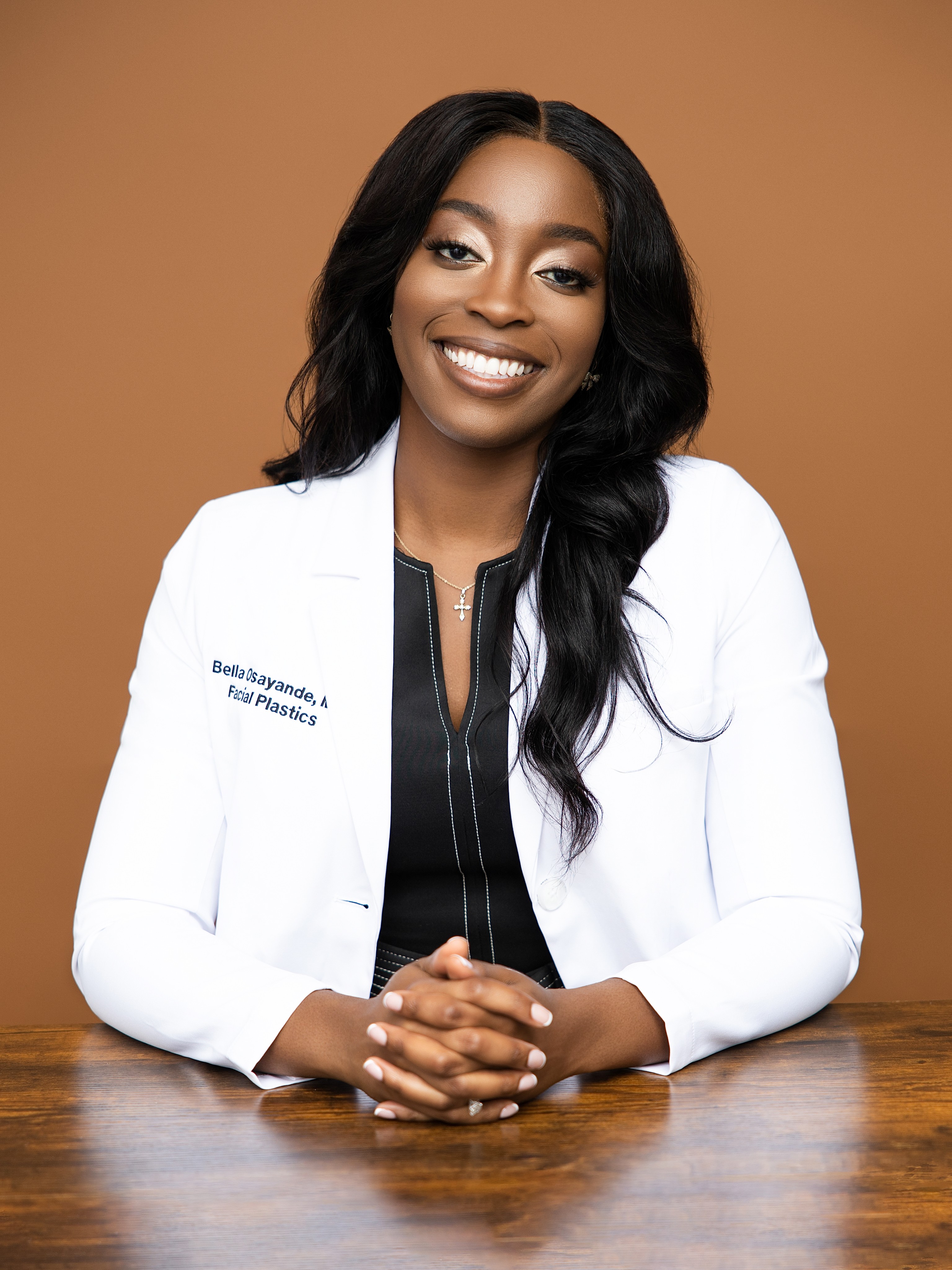
Dr. Bella Osayande is a fellowship-trained facial plastic surgeon whose practice is focused on the face, eyes, brows, nose, neck, and hair. That focused training supports a comprehensive, whole-face approach to every procedure she performs.
Her approach emphasizes precise planning, natural facial expression, honest treatment recommendations, and results that feel proportionate to the individual—not a predetermined aesthetic ideal.
Frequently asked questions
Clear answers to common questions about surgery, recovery, scars, and treatment selection.
Good candidates typically have persistent fullness in the lower cheeks that doesn't correspond to overall body weight, along with realistic expectations about the procedure's permanence. A consultation helps determine whether your fullness is best addressed through fat removal or another approach.
Yes. The fat pads removed during the procedure do not return, which is why conservative, carefully planned removal is important for a natural long-term result.
The goal is definition, not hollowness. Dr. Osayande takes a conservative approach to preserve natural fullness and structure while reducing excess cheek volume.
The procedure is performed through small incisions inside the mouth, so there is no visible external scarring.
Yes. It's often combined with procedures like chin augmentation, neck liposuction, or facial fat transfer when doing so supports a more balanced overall result.
Most patients experience swelling and some difficulty with full mouth opening for the first 1–2 weeks, with a soft-food diet recommended during initial healing.
Early swelling can make the initial appearance misleading. Final facial contour typically becomes visible over several weeks to a few months as swelling fully resolves.
No—the fat is permanently removed. This is also why patients prone to future facial thinning are generally not ideal candidates, since the face naturally loses some volume with age regardless.

