.svg)



Consultation
Dr. Osayande evaluates brow position, forehead and hairline anatomy, eyelid skin, facial symmetry, medical history, and your goals. Photographs help document the relationship between the brow and upper eyelids.

Regenerative scalp microneedling combines controlled microneedling of the scalp with PRP or PDGF growth factors to support thinning follicles as part of a nonsurgical hair restoration plan. Signature Facial Plastic Surgery serves patients in Rockville, Bethesda, and the greater Washington, DC area.
Support for the hair you still have
Microneedling of the scalp creates controlled micro-injuries that prompt a healing response, and growth factors are applied into that window — either PRP prepared from your own blood, or a PDGF preparation. The aim is to support follicles that are miniaturizing but still present.
It is a nonsurgical option, used on its own in earlier thinning or alongside medical therapy and transplant surgery as part of a longer plan.
This treatment supports existing follicles. It cannot regrow hair where follicles are no longer present, which is what a transplant addresses. Evidence for regenerative treatments continues to develop, and individual response varies more than it does with established medical therapy.
Thoughtful patient selection

You may be a good candidate if you have pattern thinning with follicles still present, are in good general health, and can commit to an initial series followed by maintenance.
PRP requires a blood draw and is less suitable for patients with certain blood or clotting conditions, or on particular medications; PDGF may be an option instead. Hair loss from an undiagnosed cause is investigated first, because the right treatment depends entirely on the diagnosis.
Diagnosis before treatment
Dr. Osayande examines the scalp and pattern of loss before recommending anything, because thinning from pattern loss, from inflammation, and from a systemic cause all look broadly similar to the patient and call for entirely different treatment.
Where this treatment fits, it is planned alongside medical therapy and, when appropriate, transplant surgery, rather than offered as a standalone answer to every kind of hair loss.
“This works on follicles that are struggling, not follicles that are gone. Knowing which you have is the whole conversation.”
From consultation through your series
Dr. Osayande evaluates brow position, forehead and hairline anatomy, eyelid skin, facial symmetry, medical history, and your goals. Photographs help document the relationship between the brow and upper eyelids.
Your incision pattern, degree of repositioning, anesthesia plan, and whether another procedure would add meaningful benefit are selected for your anatomy—not from a standard formula.
Brow lift surgery is performed with anesthesia appropriate to the planned technique and setting. The tissues are carefully repositioned and secured while the incisions are closed with attention to scar quality.
Scheduled postoperative visits allow Dr. Osayande to monitor swelling, incision healing, brow position, and your gradual return to normal activities.
Planning your downtime
Healing varies by patient, but the following timeline offers a general framework.
Scalp redness and tenderness are expected. Hair is left unwashed as instructed, with no styling products.
Redness settles and normal washing resumes.
Sessions repeat on schedule. Reduced shedding is often the first change patients notice.
Changes in density become apparent, assessed alongside the rest of your hair plan.
Reduced shedding is often noticed first, with changes in density apparent at three to six months.
Maintenance sessions are generally needed to sustain the effect, and individual response varies.
Scalp redness and tenderness, temporary shedding, and bruising or tenderness at the blood draw site when PRP is used.
Considering upper-face rejuvenation?
Your consultation will determine whether the change you see comes primarily from the brow, upper eyelids, dynamic muscle activity, or a combination of factors.
Why choose Signature
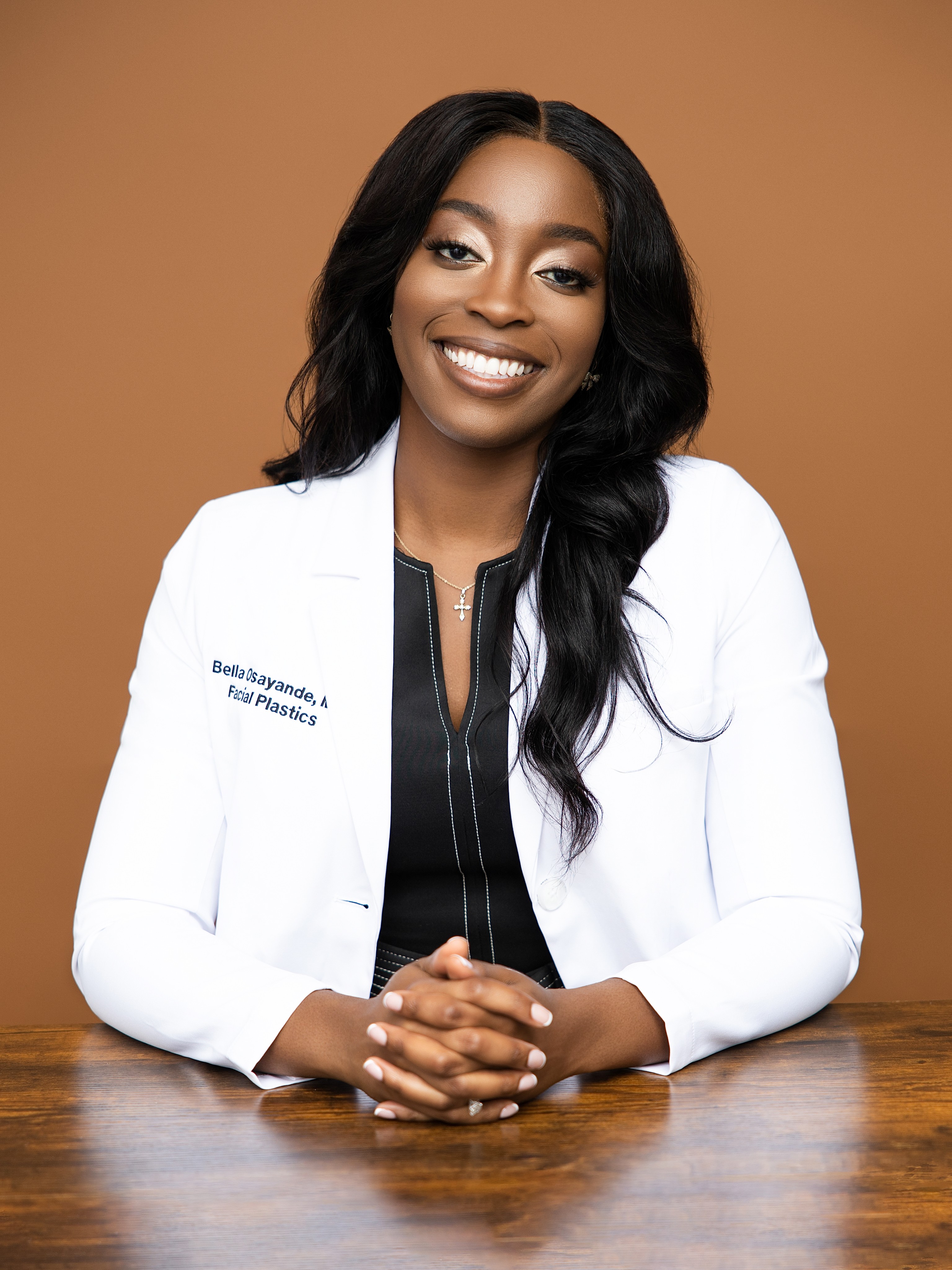
Dr. Bella Osayande is a fellowship-trained facial plastic surgeon whose practice is focused on the face, eyes, brows, nose, neck, and hair. That focused training supports a comprehensive, whole-face approach to every procedure she performs.
Her approach emphasizes precise planning, natural facial expression, honest treatment recommendations, and results that feel proportionate to the individual—not a predetermined aesthetic ideal.
Frequently asked questions
Clear answers to common questions about surgery, recovery, scars, and treatment selection.
Microneedling of the scalp combined with PRP drawn from your own blood, or a PDGF growth factor preparation, to support follicle health as part of a nonsurgical hair plan.
No. It supports follicles that are thinning but still present. It cannot regrow hair where follicles are gone, which is what a transplant addresses.
An initial series of three to four sessions spaced four to six weeks apart is typical, followed by maintenance every few months.
Hair responds slowly. Reduced shedding is often noticed first, with changes in density taking three to six months to become apparent.
Yes. It is frequently used alongside transplant surgery and medical therapy, both to support existing hair and around the time of a procedure.
It is best studied in pattern hair loss with follicles still present. Other causes of hair loss need to be identified first, since the right treatment depends on the diagnosis.
