.svg)



Consultation
Dr. Osayande evaluates brow position, forehead and hairline anatomy, eyelid skin, facial symmetry, medical history, and your goals. Photographs help document the relationship between the brow and upper eyelids.

Microneedling is a collagen induction treatment that uses fine needles to create controlled micro-injuries, prompting the skin to remodel and improve in texture, tone, and firmness. Signature Facial Plastic Surgery serves patients in Rockville, Bethesda, and the greater Washington, DC area.
Better skin, not just smoother makeup
Microneedling creates controlled micro-injuries in the skin, which prompts the body to lay down new collagen and remodel existing tissue. The result is a change in the skin's actual structure rather than a temporary surface effect.
Because the improvement comes from remodeling, it appears over weeks rather than immediately, and it builds with each session in a planned series.
Microneedling improves the quality and texture of the skin. It does not lift loose tissue or replace lost volume, and deep static folds usually need a different tool. Treatment plans often combine microneedling with other options for that reason.
Thoughtful patient selection

You may be a good candidate if you want to improve texture, pores, or acne scarring, are in good general health, and can commit to a series of sessions spaced several weeks apart.
Microneedling is deferred in the presence of active breakouts, active infection, or certain inflammatory skin conditions in the treatment area, and for patients who have recently taken isotretinoin. Your history and skin are reviewed before a plan is made.
A plan built for your skin
Needle depth, the number of passes, and the spacing between sessions are all adjusted to your skin and your concern. Acne scarring calls for a different approach than general texture and tone.
Preparation matters too. For patients prone to pigment changes, the skin is often prepared beforehand to reduce that risk, which is a conversation that happens at consultation rather than on the day of treatment.
“Microneedling changes the skin itself rather than covering it. That takes a series, and it takes patience.”
From consultation through your series
Dr. Osayande evaluates brow position, forehead and hairline anatomy, eyelid skin, facial symmetry, medical history, and your goals. Photographs help document the relationship between the brow and upper eyelids.
Your incision pattern, degree of repositioning, anesthesia plan, and whether another procedure would add meaningful benefit are selected for your anatomy—not from a standard formula.
Brow lift surgery is performed with anesthesia appropriate to the planned technique and setting. The tissues are carefully repositioned and secured while the incisions are closed with attention to scar quality.
Scheduled postoperative visits allow Dr. Osayande to monitor swelling, incision healing, brow position, and your gradual return to normal activities.
Planning your downtime
Healing varies by patient, but the following timeline offers a general framework.
Redness and warmth resembling a mild sunburn. Prescribed products only, and no makeup.
Redness fades, and mild dryness or flaking may follow.
Early texture improvement becomes visible as collagen remodeling begins.
Results build with each session, with the fullest change apparent several months after the final treatment.
Early change appears within four to six weeks, with continued improvement over several months as collagen remodels.
Improvement is generally durable with sun protection and maintenance sessions, though skin continues to age.
Redness, dryness or flaking, temporary breakouts, and, uncommonly, pigment changes or infection.
Considering upper-face rejuvenation?
Your consultation will determine whether the change you see comes primarily from the brow, upper eyelids, dynamic muscle activity, or a combination of factors.
Why choose Signature
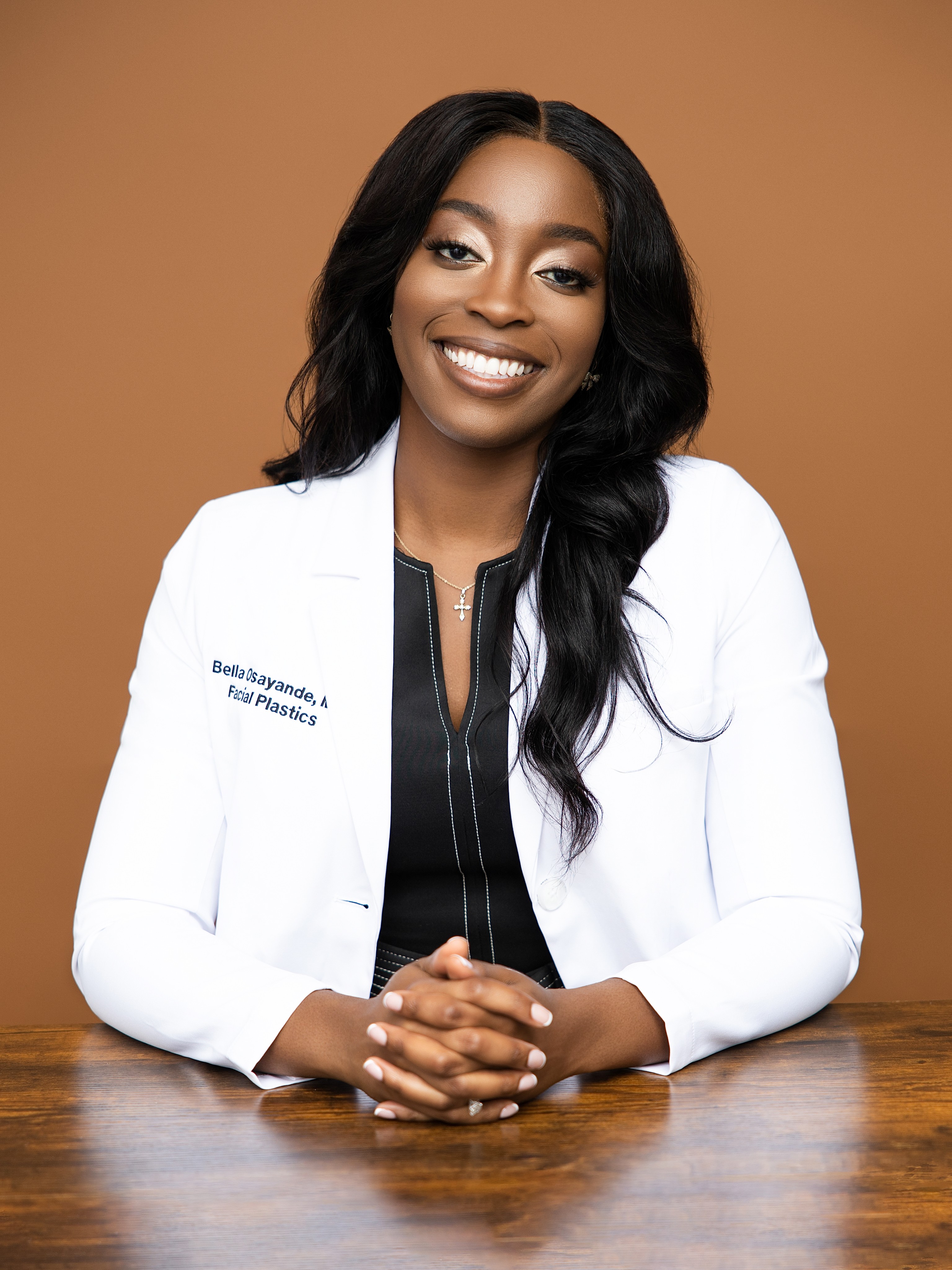
Dr. Bella Osayande is a fellowship-trained facial plastic surgeon whose practice is focused on the face, eyes, brows, nose, neck, and hair. That focused training supports a comprehensive, whole-face approach to every procedure she performs.
Her approach emphasizes precise planning, natural facial expression, honest treatment recommendations, and results that feel proportionate to the individual—not a predetermined aesthetic ideal.
Frequently asked questions
Clear answers to common questions about surgery, recovery, scars, and treatment selection.
Texture, fine lines, enlarged pores, and acne scarring. It works by creating controlled micro-injuries that prompt the skin to remodel collagen.
A series of three to four sessions spaced roughly four to six weeks apart is typical. Acne scarring often calls for more.
Topical numbing is applied beforehand. Most patients describe the sensation as a vibration with mild prickling, more noticeable over bone.
Usually one to three days, similar in appearance to a mild sunburn. Makeup is generally avoided for the first 24 hours.
Yes. Treatment can be customized to the face, neck, chest, or scalp depending on your concerns.
Patients with active breakouts, active infection, or certain skin conditions in the treatment area, and those who have recently taken isotretinoin. This is reviewed at consultation.
