.svg)



Consultation
Dr. Osayande evaluates brow position, forehead and hairline anatomy, eyelid skin, facial symmetry, medical history, and your goals. Photographs help document the relationship between the brow and upper eyelids.

Eyebrow restoration is a hair transplant procedure that places individual follicles into the brow to rebuild density and shape, producing hair that grows rather than pigment that fades. Signature Facial Plastic Surgery serves patients in Rockville, Bethesda, and the greater Washington, DC area.
Brows that grow, not pigment that fades
Eyebrow restoration transplants individual hairs, usually taken from the back of the scalp, into the brow to rebuild density and refine shape. Unlike pigment-based options, the result grows and can be groomed like natural brow hair.
The brow is one of the most demanding areas in hair restoration. Hair direction shifts several times between the inner and outer brow, and each graft has to follow that changing pattern to read as natural.
Because grafts come from the scalp, they keep scalp growth characteristics and grow longer than native brow hair. Regular trimming is a permanent part of the result, and it is worth being certain that suits you before proceeding.
Thoughtful patient selection

You may be a good candidate if you have sparse or uneven brows, adequate scalp donor supply, realistic expectations about density and the need for trimming, and you are in good general health.
Brow loss from an active medical or autoimmune cause needs to be diagnosed and stable before transplantation, since grafts placed into an active process may not survive. Patients with a history of keloid scarring are also assessed carefully.
Shape before density
Dr. Osayande designs brow shape against your facial proportions and eye position before any graft is placed, and reviews it with you while it can still be adjusted.
Placement then follows the brow's native architecture: hairs angled upward at the head, sweeping outward through the body, and flattening along the tail. Single-hair grafts are used throughout to keep the edges soft.
“A brow changes direction four or five times across its length. Get that wrong and it reads as rows, not brows.”
From consultation through regrowth
Dr. Osayande evaluates brow position, forehead and hairline anatomy, eyelid skin, facial symmetry, medical history, and your goals. Photographs help document the relationship between the brow and upper eyelids.
Your incision pattern, degree of repositioning, anesthesia plan, and whether another procedure would add meaningful benefit are selected for your anatomy—not from a standard formula.
Brow lift surgery is performed with anesthesia appropriate to the planned technique and setting. The tissues are carefully repositioned and secured while the incisions are closed with attention to scar quality.
Scheduled postoperative visits allow Dr. Osayande to monitor swelling, incision healing, brow position, and your gradual return to normal activities.
Planning your downtime
Healing varies by patient, but the following timeline offers a general framework.
Swelling around the eyes and forehead is common. Grafts are left undisturbed.
Small crusts resolve with the gentle care you are instructed to follow.
Transplanted hairs shed before regrowth begins.
Growth begins around months three to four, with the shape settled at nine to twelve months. Regular trimming begins.
Growth begins around months three to four, with the shape settled at nine to twelve months.
Transplanted follicles are generally durable. Because they retain scalp growth characteristics, the hairs need ongoing trimming.
Swelling, infection, asymmetry, poor graft survival, and hairs growing at an unintended angle.
Considering upper-face rejuvenation?
Your consultation will determine whether the change you see comes primarily from the brow, upper eyelids, dynamic muscle activity, or a combination of factors.
Why choose Signature
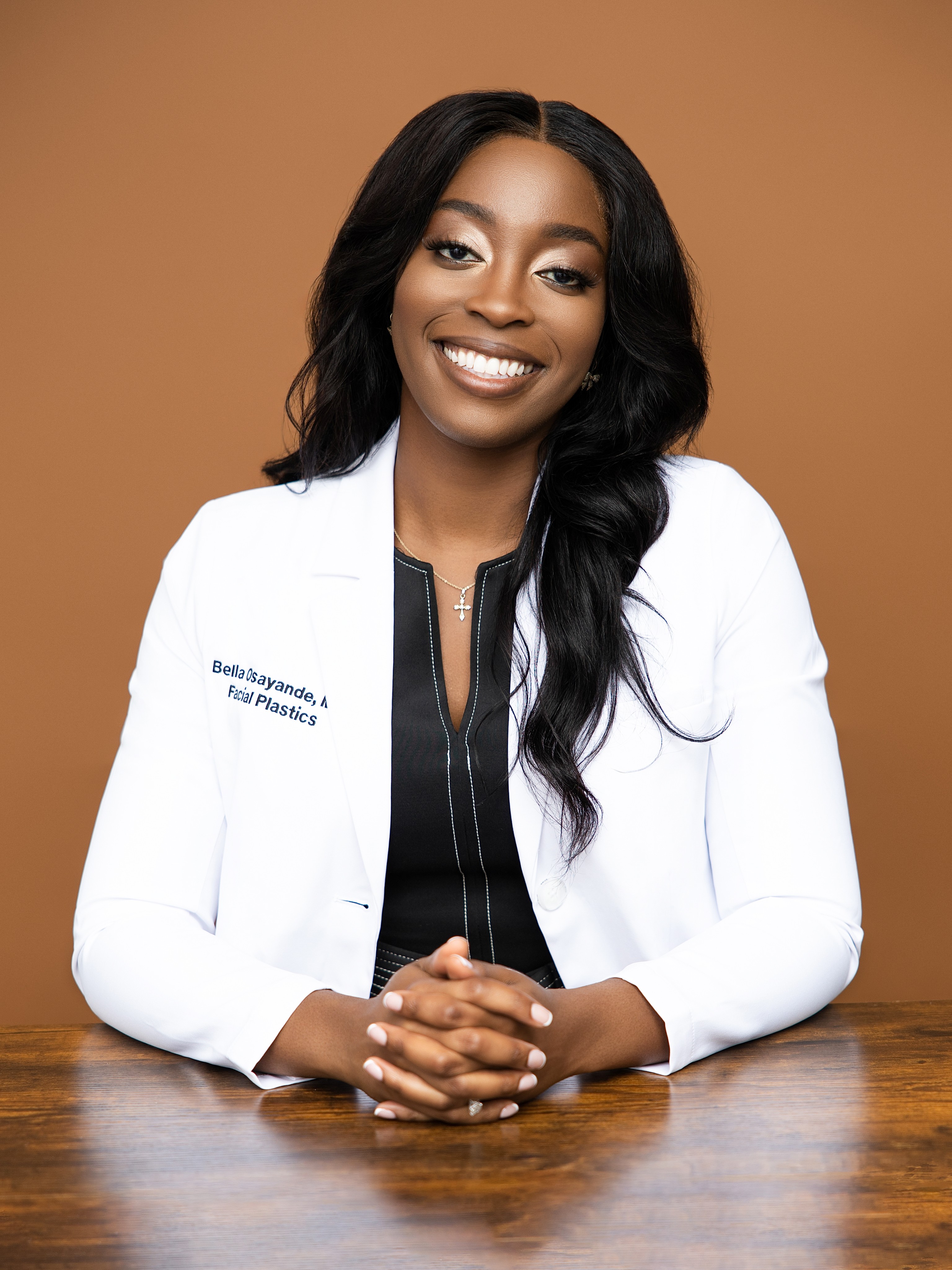
Dr. Bella Osayande is a fellowship-trained facial plastic surgeon whose practice is focused on the face, eyes, brows, nose, neck, and hair. That focused training supports a comprehensive, whole-face approach to every procedure she performs.
Her approach emphasizes precise planning, natural facial expression, honest treatment recommendations, and results that feel proportionate to the individual—not a predetermined aesthetic ideal.
Frequently asked questions
Clear answers to common questions about surgery, recovery, scars, and treatment selection.
Microblading deposits pigment in the skin and fades over months. Eyebrow restoration transplants your own hair follicles, which generally persist and can be groomed like natural brow hair.
Yes. Grafts taken from the scalp retain scalp growth characteristics, so they grow longer than native brow hair and need regular trimming.
Commonly 150 to 400 grafts per brow, depending on existing density and the shape being created.
Brow hair grows in a distinct pattern that changes direction across the brow. Each graft is placed at an angle that follows that pattern, which is what separates a natural brow from a row of implanted hairs.
Transplanted hairs shed within the first few weeks. New growth generally begins around months three to four, with the shape settled at nine to twelve months.
Yes. Brows thinned by years of plucking, waxing, or by scarring are among the most common reasons patients seek this procedure.
