.svg)


Consultation
Dr. Osayande evaluates brow position, forehead and hairline anatomy, eyelid skin, facial symmetry, medical history, and your goals. Photographs help document the relationship between the brow and upper eyelids.

Rhinoplasty is a surgical procedure that refines the shape and proportion of the nose while preserving its function and your facial identity. Signature Facial Plastic Surgery serves patients in Rockville, Bethesda, and the greater Washington, DC area.
A refined, balanced nasal profile
Rhinoplasty addresses concerns with nasal shape, size, and proportion, including a dorsal hump, wide or asymmetric nasal tip, or overall imbalance with the rest of the face. Beyond appearance, rhinoplasty can also improve breathing function when structural issues are contributing to nasal obstruction.
At Signature Facial Plastic Surgery, every rhinoplasty is planned around your unique facial proportions and background, with the goal of a nose that looks like it belongs on your face.
Rhinoplasty is one of the most technically demanding facial procedures, and results depend heavily on surgeon experience and planning. Dr. Osayande takes an individualized approach rather than applying a single aesthetic template to every patient.
Thoughtful patient selection

You may be a candidate for rhinoplasty if you're bothered by the shape, size, or proportion of your nose, or if structural issues are affecting your breathing. Good candidates have finished facial growth, are in good general health, and have realistic expectations about achievable results.
Because rhinoplasty changes a central feature of the face, your consultation will focus heavily on understanding your specific goals and ensuring they're both achievable and aligned with facial harmony.
An individualized surgical plan
Dr. Osayande evaluates your nasal bones, cartilage, skin thickness, and breathing function, along with how your nose relates to your chin, forehead, and overall facial proportions. The surgical plan is built around these individual factors rather than a single standardized technique.
Both open and closed rhinoplasty approaches may be used depending on the complexity of the changes needed, with incision placement chosen to minimize visible scarring.
“A successful rhinoplasty shouldn't announce itself. The goal is a nose that looks refined and balanced with your face—one people notice looks better, without being able to say exactly why.”
From consultation through recovery
Dr. Osayande evaluates brow position, forehead and hairline anatomy, eyelid skin, facial symmetry, medical history, and your goals. Photographs help document the relationship between the brow and upper eyelids.
Your incision pattern, degree of repositioning, anesthesia plan, and whether another procedure would add meaningful benefit are selected for your anatomy—not from a standard formula.
Brow lift surgery is performed with anesthesia appropriate to the planned technique and setting. The tissues are carefully repositioned and secured while the incisions are closed with attention to scar quality.
Scheduled postoperative visits allow Dr. Osayande to monitor swelling, incision healing, brow position, and your gradual return to normal activities.
Planning your downtime
Healing varies by patient, but the following timeline offers a general framework.
Swelling and bruising around the eyes and nose are expected; a splint remains in place.
Bruising typically peaks then improves; the splint is usually removed around one week.
Most visible bruising resolves, and patients often feel comfortable in social settings.
Nasal swelling gradually subsides, with the nose continuing to refine over 6–12 months.
Initial swelling significantly affects appearance; most patients see 80–90% of their result by 3 months, with final refinement over up to a year.
Yes, though the nose will continue to age subtly over time, similar to the rest of the face.
Bleeding, infection, asymmetry, breathing changes, and the possibility of requiring a minor revision procedure.
Considering upper-face rejuvenation?
Your consultation will determine whether the change you see comes primarily from the brow, upper eyelids, dynamic muscle activity, or a combination of factors.
Why choose Signature
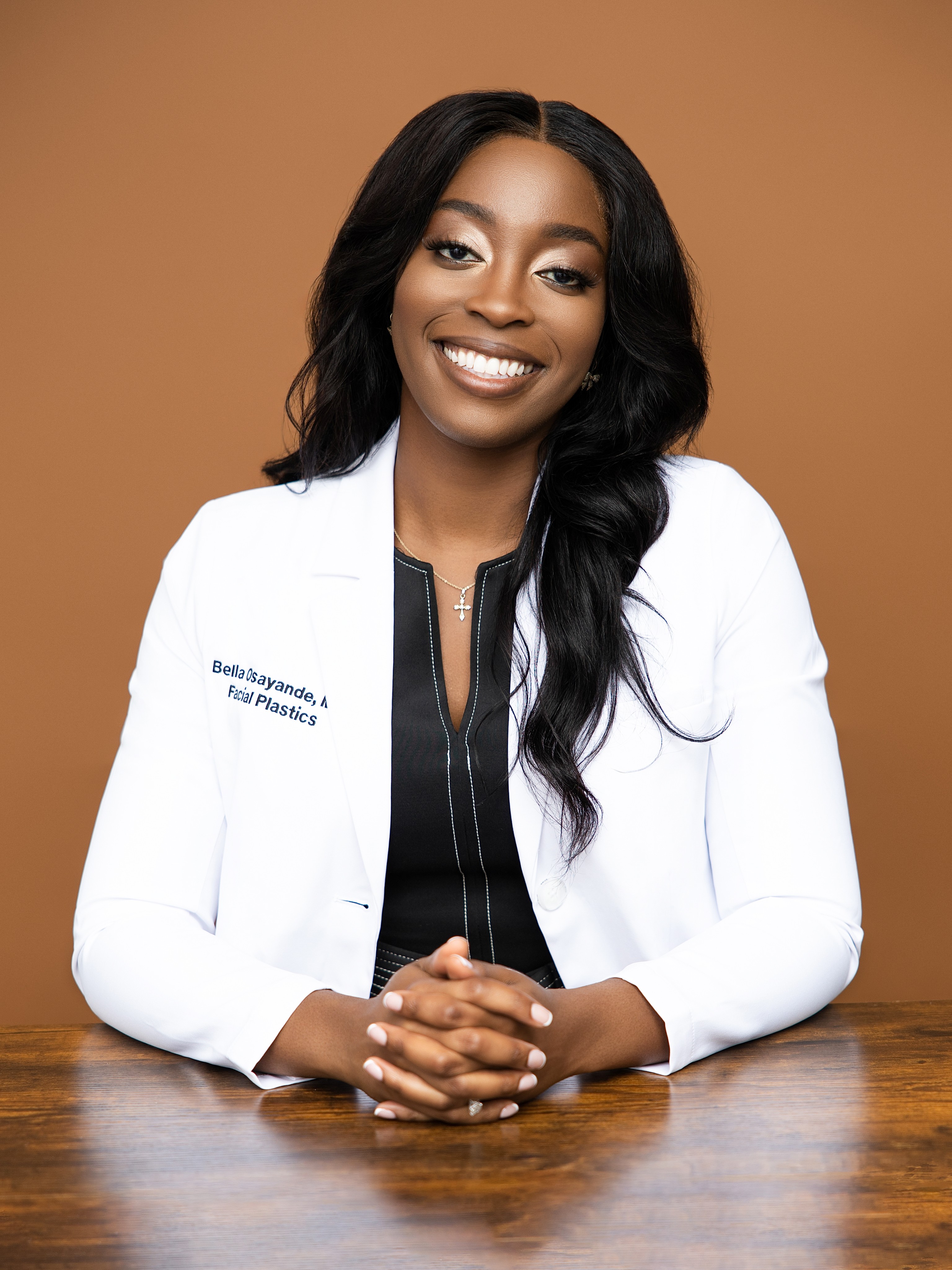
Dr. Bella Osayande is a fellowship-trained facial plastic surgeon whose practice is focused on the face, eyes, brows, nose, neck, and hair. That focused training supports a comprehensive, whole-face approach to every procedure she performs.
Her approach emphasizes precise planning, natural facial expression, honest treatment recommendations, and results that feel proportionate to the individual—not a predetermined aesthetic ideal.
Frequently asked questions
Clear answers to common questions about surgery, recovery, scars, and treatment selection.
Good candidates are bothered by their nasal shape, size, or breathing function, have finished facial growth, and have realistic expectations discussed during consultation.
When structural issues contribute to nasal obstruction, rhinoplasty can improve breathing function alongside cosmetic changes.
Both techniques are effective; the right choice depends on the complexity of changes needed, determined during your consultation.
Most visible swelling resolves within a few months, though subtle refinement continues for up to a year, particularly at the nasal tip.
Most patients report more pressure and congestion than significant pain, typically managed with prescribed medication during early recovery.
The goal is a natural-looking result that enhances facial balance without appearing obviously operated on.

