.svg)


Consultation
Dr. Osayande evaluates brow position, forehead and hairline anatomy, eyelid skin, facial symmetry, medical history, and your goals. Photographs help document the relationship between the brow and upper eyelids.

Otoplasty is ear surgery that refines ear shape, position, or prominence to improve facial balance and symmetry. Signature Facial Plastic Surgery serves patients in Rockville, Bethesda, and the greater Washington, DC area.
More balanced, proportionate ears
Otoplasty addresses ears that protrude excessively, are asymmetric, or have shape irregularities that affect facial balance. The goal is to create ears that sit naturally against the head and appear proportionate with the rest of the face, without looking overly “pinned back.”
At Signature Facial Plastic Surgery, otoplasty is available for both adult and pediatric patients, with the surgical plan tailored to the specific ear structure involved.
The goal of otoplasty is natural-looking correction, not an overly flattened or “pinned” appearance. Dr. Osayande plans each case around the specific cartilage structure causing the protrusion.
Thoughtful patient selection

You may be a candidate for otoplasty if you have protruding, asymmetric, or misshapen ears that affect your confidence or facial balance. The procedure is appropriate for both children (typically once ear growth is mostly complete, around age 5-6) and adults.
Good candidates are in good general health with realistic expectations about achievable improvement in ear position and shape.
A natural-looking correction
Dr. Osayande evaluates the specific cartilage structure causing ear protrusion or asymmetry, since different patients require different surgical techniques to achieve natural results. The goal is ears that sit closer to the head without looking overcorrected or unnaturally flat.
Incisions are typically placed behind the ear, in the natural crease where the ear meets the head, keeping scarring well hidden.
“Otoplasty should look like the ears were always meant to sit that way—not obviously 'done.' Overcorrection is just as noticeable as the original concern.”
From consultation through recovery
Dr. Osayande evaluates brow position, forehead and hairline anatomy, eyelid skin, facial symmetry, medical history, and your goals. Photographs help document the relationship between the brow and upper eyelids.
Your incision pattern, degree of repositioning, anesthesia plan, and whether another procedure would add meaningful benefit are selected for your anatomy—not from a standard formula.
Brow lift surgery is performed with anesthesia appropriate to the planned technique and setting. The tissues are carefully repositioned and secured while the incisions are closed with attention to scar quality.
Scheduled postoperative visits allow Dr. Osayande to monitor swelling, incision healing, brow position, and your gradual return to normal activities.
Planning your downtime
Healing varies by patient, but the following timeline offers a general framework.
Mild to moderate discomfort and swelling are expected; a protective dressing remains in place.
Swelling gradually improves; the dressing is typically replaced with a lighter headband.
Most patients return to work or school, continuing to wear a protective headband at night.
Residual swelling resolves and final ear position becomes fully apparent.
Initial swelling affects appearance; final ear position is typically visible within a few weeks to a couple of months.
Yes, otoplasty results are generally permanent, since cartilage does not return to its original shape.
Bleeding, infection, asymmetry, changes in ear sensation, and, rarely, need for revision.
Considering upper-face rejuvenation?
Your consultation will determine whether the change you see comes primarily from the brow, upper eyelids, dynamic muscle activity, or a combination of factors.
Why choose Signature
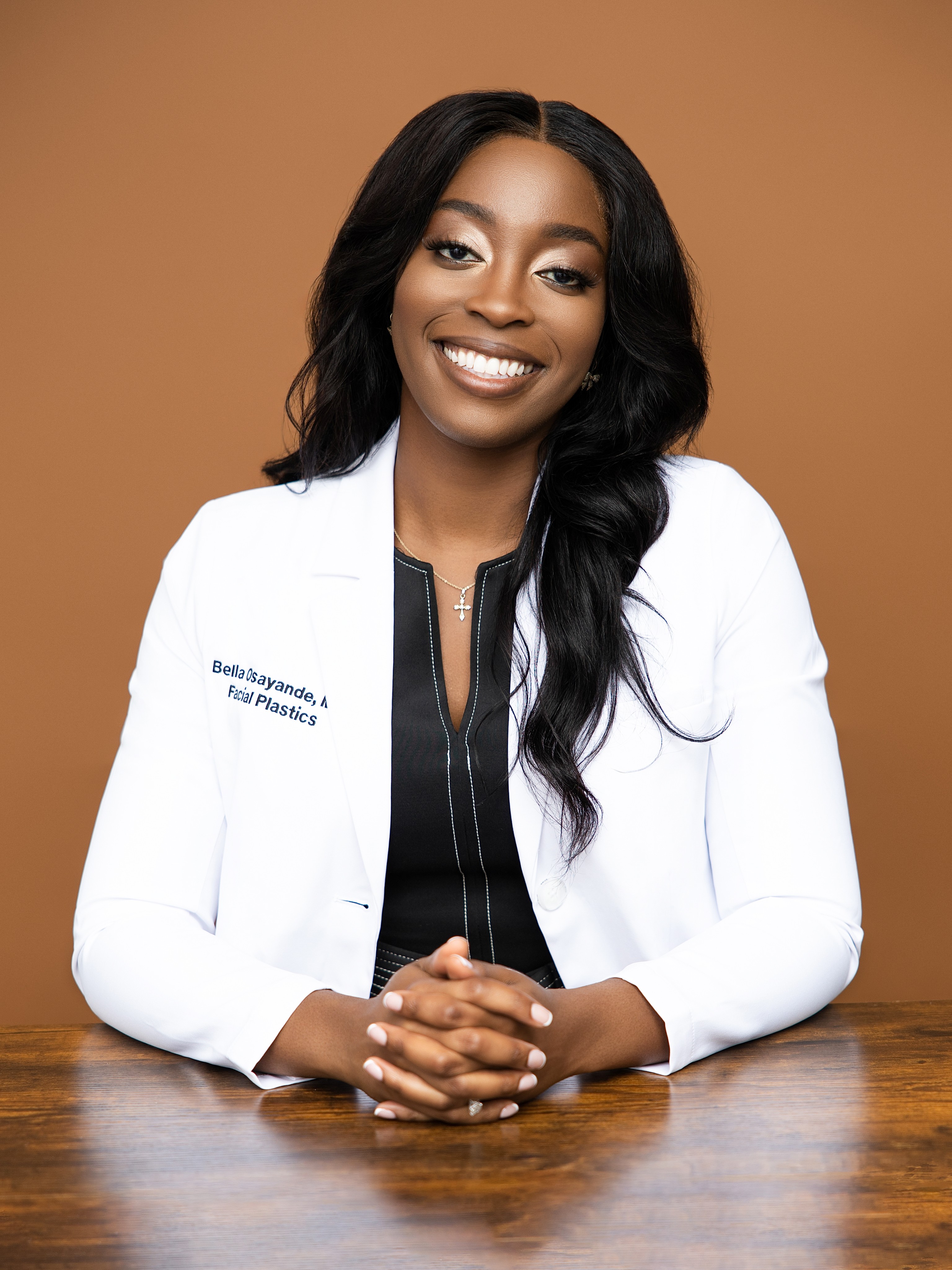
Dr. Bella Osayande is a fellowship-trained facial plastic surgeon whose practice is focused on the face, eyes, brows, nose, neck, and hair. That focused training supports a comprehensive, whole-face approach to every procedure she performs.
Her approach emphasizes precise planning, natural facial expression, honest treatment recommendations, and results that feel proportionate to the individual—not a predetermined aesthetic ideal.
Frequently asked questions
Clear answers to common questions about surgery, recovery, scars, and treatment selection.
Good candidates have protruding, asymmetric, or misshapen ears affecting confidence or facial balance, with realistic expectations for correction.
It's often performed once ear cartilage growth is largely complete, typically around age 5-6, though many patients have the procedure as adults.
Incisions are placed behind the ear, in the natural crease where the ear meets the head.
The goal is a natural-looking correction, not an overcorrected or flattened appearance.
Most patients feel comfortable returning to normal activities within 1–2 weeks, with a protective headband worn at night for several weeks.
Coverage varies and typically depends on whether the procedure is considered medically necessary; this is best discussed during consultation.

